Rosedil vitamins and minerals: the label amounts next to NIH figures
Besides biotin, the Rosedil label lists vitamin C at 157 mg, niacin at 30 mg, vitamin B6 at 1.6 mg, vitamin B5 at 14 mg, calcium at 11 mg and zinc at 12 mg per serving. Each of these sits below its NIH upper limit, but niacin sits at the amount where flushing can begin.1
Reading each line against a government figure takes a few minutes and tells you more than the percent daily values do. The figures below are for adults, and your own needs may differ.
Vitamin C
The label lists 157 mg of vitamin C as ascorbic acid, which is 174% of the label daily value. The NIH gives a recommended intake of 90 mg for men and 75 mg for women, and an upper limit of 2,000 mg a day from all sources.2

The 157 mg figure is a little under twice the recommended amount and under one-tenth of the limit. Large doses can upset the stomach, but this amount is far from that range. People who smoke need 35 mg more a day, and anyone in cancer care should ask their oncologist before using vitamin C or other antioxidant supplements, according to the NIH.
Vitamin B3, as niacin
The label lists 30 mg of vitamin B3 as niacin, or 188% of the daily value. The NIH gives a recommended intake of 16 mg for men and 14 mg for women and an upper limit of 35 mg from supplements.1
The same NIH sheet says supplements with 30 mg or more of nicotinic acid can cause flushing, with red, burning or itchy skin and sometimes headache or dizziness. The label does not name the form beyond "niacin", so we cannot say whether this capsule flushes. MedlinePlus says the nicotinamide form does not appear to flush.3
Vitamin B6, B5, calcium and zinc
The remaining lines are shorter to explain.
| Line | Label | NIH reference |
|---|---|---|
| Vitamin B6 | 1.6 mg | 1.3 mg recommended at ages 19 to 50; 100 mg upper limit |
| Vitamin B5 | 14 mg | About 5 mg recommended; safe even at high doses |
| Calcium | 11 mg | A trace; adult needs are about a thousand mg |
| Zinc | 12 mg | 11 mg men, 8 mg women; 40 mg upper limit |
The B6 line is close to the recommended amount, and the NIH says nerve damage has been reported only with high supplement doses taken for a year or longer.4 Pantothenic acid, vitamin B5, is above the recommended amount, and the NIH says even 10,000 mg a day causes only an upset stomach.5
Zinc, and why the amount matters
The label lists 12 mg of zinc as zinc oxide, 109% of the daily value. The NIH gives 11 mg for men and 8 mg for women, with an upper limit of 40 mg a day from all sources, and says too much zinc over a long time can lower copper levels.6
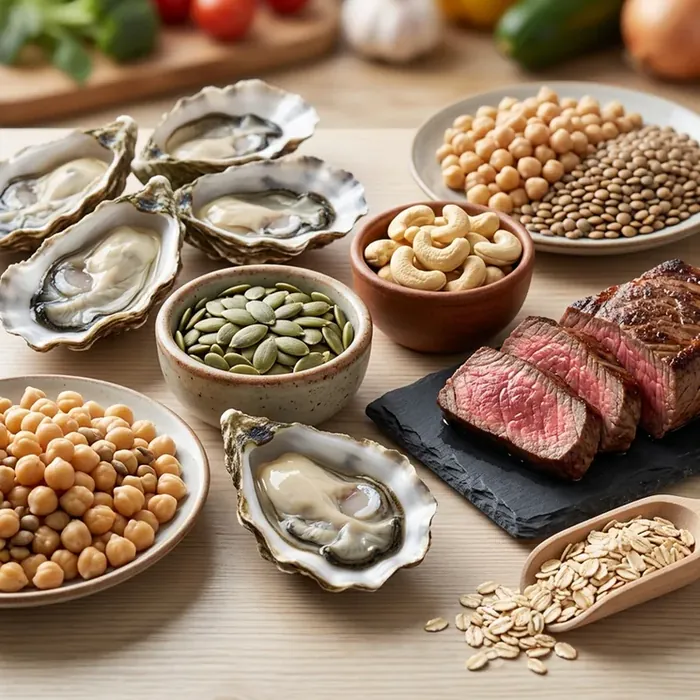
Zinc deficiency can cause hair loss in older children, according to the NIH, and that is likely why zinc is on hair-product labels. For adults who eat meat, fish, eggs or dairy, deficiency is uncommon, and the 12 mg here is one source among several in your day.
Adding your own totals
If you take a multivitamin as well, add its zinc, vitamin C, B6 and niacin to the Rosedil figures. The totals, not the individual labels, are what the upper limits apply to. Our upper limits page lays out the sums, and the safety page explains who should ask first.
What to check on your own bottle
Compare these points against the panel on your bottle before you take a capsule.
- Vitamin C reads 157 mg, B3 reads 30 mg, B6 reads 1.6 mg, B5 reads 14 mg.
- Calcium reads 11 mg and zinc reads 12 mg.
- The serving is two capsules, so one day.
If you want the plain-language version of each line, the ingredients page covers all eight, and the supplement facts page shows the panel itself. The side effects page covers the flushing and stomach upset that the NIH sheets describe, and the pricing page shows what each pack costs per day.
Frequently asked questions
How much vitamin C is in Rosedil?
157 mg per two-capsule serving, which is below the 2,000 mg adult upper limit.
Is the niacin in Rosedil the flushing form?
The label says only "niacin". At 30 mg, the NIH says nicotinic acid can cause flushing, so watch for it.
Is 12 mg of zinc too much?
It is below the 40 mg adult upper limit, and above the recommended intake. Count zinc from your other supplements too.
Why is calcium only 11 mg?
The label lists it as dicalcium phosphate, which may be a carrier and not a main ingredient. We cannot say why it is there.
Sources
- NIH Office of Dietary Supplements: Niacin: Fact Sheet for Consumers
- NIH Office of Dietary Supplements: Vitamin C: Fact Sheet for Consumers
- MedlinePlus: Niacin (Vitamin B3)
- NIH Office of Dietary Supplements: Vitamin B6: Fact Sheet for Consumers
- NIH Office of Dietary Supplements: Pantothenic Acid: Fact Sheet for Consumers
- NIH Office of Dietary Supplements: Zinc: Fact Sheet for Consumers